

The Alliance of Independent Forensic Experts (ANSE) is an association of professionals from different fields. They carry out research in their respective areas and prepare conclusions that are used by courts and organizations. The alliance employs specialists in religious studies, linguistics, economics, automotive engineering, and other types of investigations. As the number of employees grows, so does the amount of conclusions to be checked. Sailet has developed a quality control system based on artificial intelligence. It maintains high work standards and reduces the workload on experienced personnel. A young expert uploads the conclusion and case materials. The system checks the text, points out errors, and prepares a review. This takes into account previous ANSE cases and current laws.
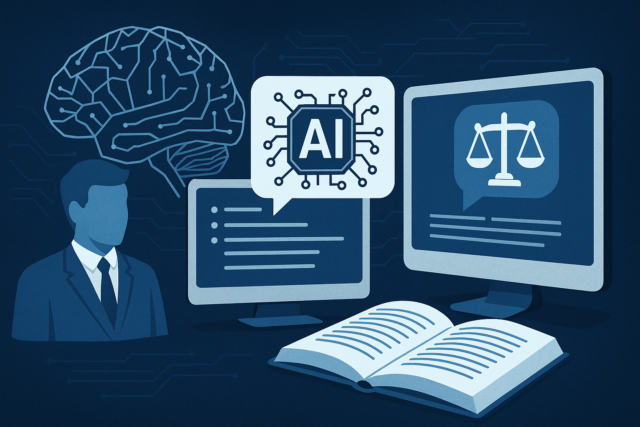
Initially, the request was narrowly focused: to develop a system using artificial intelligence to enhance the qualifications of traffic rules experts. To prepare conclusions effectively, it’s important that specialists can quickly analyze road situations, notice details, evaluate participants' behavior, and correctly apply legal regulations.
AI could generate different scenarios, 3D visualization would help “see” the disputed moment through the eyes of an expert, while test assignments would reinforce the material.
However, during discussions, the requirements expanded. Ultimately, it was decided to create a platform capable of functioning in other areas of expertise as well. For the first stage MVP, they chose religious studies. — одно из направлений, где АНСЭ активно готовит специалистов.
The main challenge was that checking the works of junior specialists took up resources of senior experts. Their time is expensive, but much of it was spent on routine reviews. This slowed down processes and reduced overall organizational efficiency.
Now part of this burden has been delegated to an artificial intelligence system. An expert uploads his or her conclusion and receives a comprehensive review with indications of errors, inaccuracies, and incorrect references to regulatory acts. AI compares the document with a knowledge base embedded with relevant legislative documents, laws, and religious books. As a result, the specialist receives recommendations that help him/her grow professionally. Senior colleagues no longer have to distract themselves with reviewing each document, which saves both time and money for the company. Freed-up resources can now be directed towards key tasks that bring real value to the organization.
What makes AI interesting is its ability to learn. When developing the system, Sailet provided this option. If an expert disagrees with comments made by the system or considers them inaccurate, he/she can leave feedback. These remarks are reviewed by the administrator together with senior experts, after which changes are made to the knowledge base. Thus, AI constantly learns and becomes more accurate. But that's not all. The system is connected to global models that are regularly updated and become smarter. This allows the solution to remain relevant and evolve along with advanced technologies.
Once, the system pointed out an inaccuracy even in the work of the head of ANSE. For the team, this became a signal that the solution really reaches a new level of quality.
How did Sailet implement the project?
Development took about four months. During the process, we had to overcome both technical and logical limitations. One major problem was the token limit imposed on the neural network. The model couldn't fully process large expert opinions at once. A creative solution involved connecting two AI models simultaneously, each performing its own role in data analysis. While one handled parsing and structuring the document, the other worked on generating detailed reviews. This approach allowed us to distribute the load and ensure high accuracy of analysis.
Moreover, the AI didn't operate in a vacuum. To truly assist junior experts, the system was trained on the knowledge base of the Alliance itself. This included archives of past processes, exemplary conclusions verified by senior specialists. Additionally, the AI continuously refers to up-to-date normative and legal databases, laws, and specialized literature. Thanks to this, reviews are backed by references to fresh documents.
For Sailet, this case was unique. We didn’t just automate the process; we created a system that combines the best practices of AI and live expert work. Essentially, it's a tool for continuous learning and growth. Technology helps experts perform better. In return, experts train the system and make it more reliable. On our side, we're able to integrate AI solutions into highly specialized areas and turn them into working tools for businesses and government agencies.


 English
  Русский
  Қазақ тілі
  Español